Prioritisation
How to Triage Incoming Work Requests for Maximum Efficiency
26 October 2026 · 9 min read
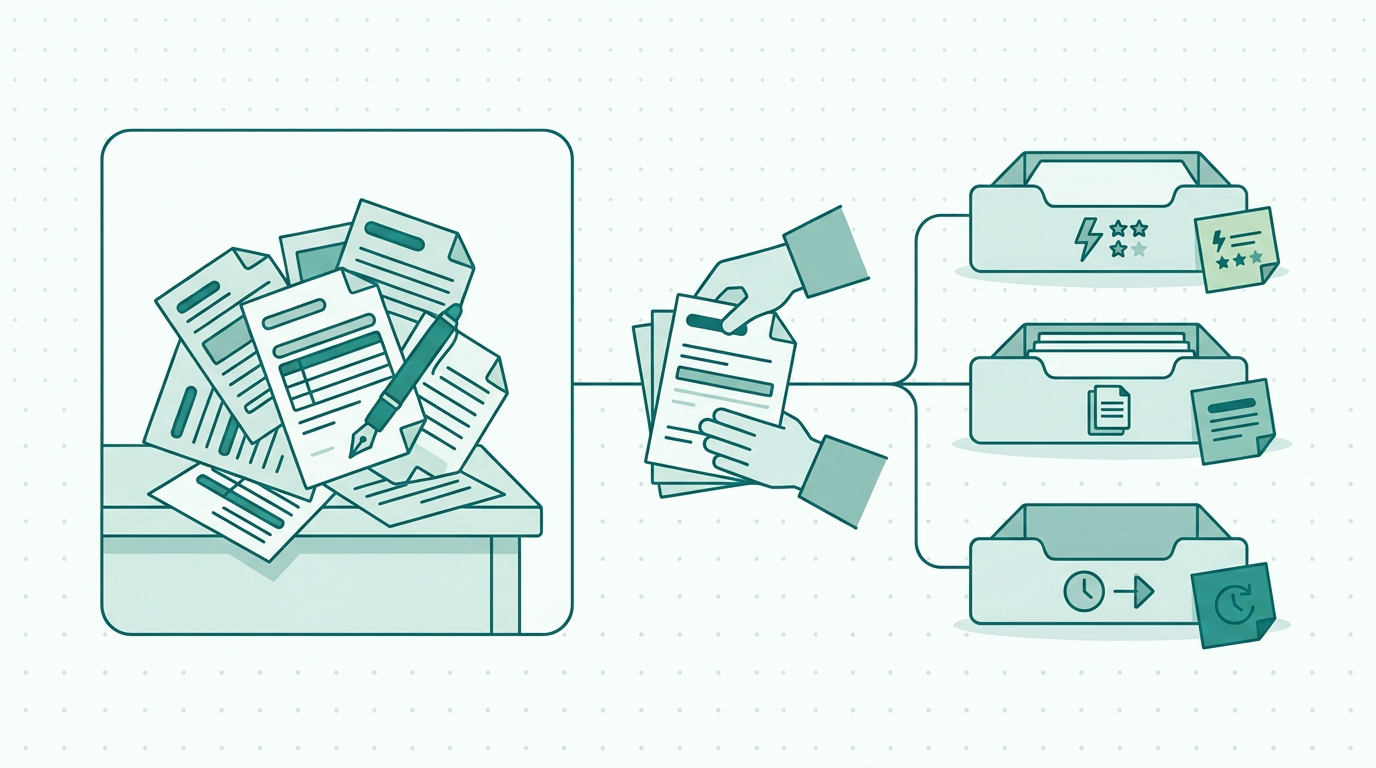
Discover expert tips on how to triage incoming work requests efficiently. Enhance team productivity and streamline your workflow with effective techniques.
Mastering the art of triage: Streamlining your work requests
In today's fast-paced business environment, organizations face an overwhelming influx of work requests from various sources. To effectively manage this challenge, learning how to triage incoming work requests becomes essential. From internal team members to external partners, the task of sorting through these requests can feel daunting.
Managers and decision-makers in smaller organizations often struggle to prioritize effectively, leading to missed deadlines and inefficient workflows. Triage is the solution that enables teams to assess, prioritize, and address incoming work requests systematically. By adopting a structured approach to triage, organizations can enhance their productivity and ensure that critical tasks receive the attention they deserve.
This systematic approach not only helps in handling immediate tasks but also contributes to long-term strategic planning. By creating a well-defined triage process, organizations can align their resources with business objectives, ensuring that they are not just reacting to requests as they come in but are strategically positioning themselves for future success. PlanToValue offers practical tools that facilitate this process, helping teams manage their incoming requests seamlessly while promoting a culture of accountability and efficiency.
Understanding the Importance of Triage
Triage is a critical process that allows organizations to evaluate and prioritize work requests based on urgency and importance. This structured evaluation helps to avoid bottlenecks and ensures that resources are allocated effectively. Effective task prioritization can improve team productivity by up to 25%.
This means that the right requests are not only addressed but are done so in a timely manner that aligns with business goals. Additionally, clear prioritization helps in managing stakeholder expectations by providing transparency regarding which requests will be addressed first. This transparency is vital in maintaining trust and collaboration within teams and between departments.
Without an effective triage process, teams may find themselves overwhelmed, leading to burnout and decreased morale. A well-functioning triage system fosters a sense of control among team members, allowing them to focus on completing high-value tasks rather than getting lost in the sheer volume of incoming requests. Implementing a triage system, like the one offered by PlanToValue, can empower teams to handle incoming requests with confidence and clarity while enhancing overall organizational performance.
Key Steps in the Triage Process
To establish an effective triage system, organizations can follow several key steps that promote streamlined workflows and optimal resource allocation. First, clearly define the criteria for evaluating requests. This may include factors such as urgency, impact on business goals, resource availability, and potential return on investment.
Second, categorize incoming requests to simplify the assessment process. Common categories include high, medium, and low priority, which help teams quickly identify which tasks require immediate attention. Third, assign responsibility for decision-making to specific team members to ensure accountability in the triage process.
This not only streamlines decision-making but also empowers team members to take ownership of their roles. Additionally, organizations should regularly revisit their criteria to adapt to evolving business needs and market conditions. By utilizing tools like PlanToValue, organizations can automate aspects of triage, making the process more efficient and less prone to human error.
This automation can reduce the workload on teams and allow them to focus on more strategic tasks, ultimately enhancing productivity and job satisfaction.
Utilizing Tools to Enhance Triage Efficiency
Incorporating dedicated tools for triaging incoming work requests can significantly improve efficiency and clarity. Software like PlanToValue provides managers with functionalities that help streamline the triage process. With features that allow for customized criteria, teams can easily input and evaluate incoming requests based on their unique needs.
Additionally, visualization tools within PlanToValue can help teams see the status of requests at a glance, allowing for quick decisions and adjustments as needed. By automating repetitive tasks and providing clear insights, PlanToValue ensures that no request is overlooked and that teams can focus on executing high-priority tasks. Furthermore, the integration of analytics capabilities can provide teams with data-driven insights into their triage process, allowing them to identify patterns and areas for improvement.
By leveraging these tools, organizations not only enhance their operational efficiency but also foster a culture of continuous improvement, where teams are encouraged to refine their processes based on real-time feedback and performance metrics.
Establishing Clear Communication Channels
Effective communication is another essential component of a successful triage process. Team members and external partners should have clear guidelines on how to submit requests, including the information required to facilitate evaluation. Regular updates on the status of requests can prevent misunderstandings and foster a collaborative environment.
Utilizing platforms like PlanToValue allows teams to maintain transparency by providing stakeholders with real-time updates on request statuses. This level of communication helps to manage expectations and ensures that everyone is aligned on priorities, further enhancing the triage process. Organizations can also implement regular check-ins and feedback sessions to discuss ongoing requests, allowing for adjustments based on the evolving context.
By encouraging an open dialogue about priorities and challenges, teams can create a more agile and responsive environment where every member feels valued and heard. This collaborative approach not only strengthens team cohesion but also drives engagement and motivation among team members.
Evaluating Triage Effectiveness and Making Adjustments
Once a triage process is implemented, it is crucial to regularly evaluate its effectiveness. This can involve gathering feedback from team members regarding the clarity of the process, the appropriateness of prioritization, and overall satisfaction with how requests are handled. Key performance indicators (KPIs) can be established to measure the impact of triage on team productivity and project success rates.
Common KPIs may include the percentage of requests completed on time, the average time taken to respond to requests, and team member satisfaction levels. If areas for improvement are identified, adjustments can be made to the triage criteria or tools used. Continual refinement of the triage process ensures that it remains relevant and effective as the organization grows and evolves.
Additionally, it is beneficial to conduct periodic reviews of the overall workflow to identify potential bottlenecks and areas for further optimization. By fostering a culture of continuous improvement and adaptability, organizations can ensure that their triage processes not only meet current needs but are also prepared to tackle future challenges.
Best Practices for Effective Triage
To ensure the success of your triage process, consider implementing these best practices: First, ensure that all team members are trained on the triage process and its importance. This training can include workshops, documentation, and mentoring sessions. Second, maintain flexibility in your criteria, allowing for adjustments based on changing business priorities.
Regularly revisit and revise your criteria to reflect shifts in the organization’s goals. Third, document the process clearly, providing a reference point for team members when assessing requests. A well-documented process can serve as a training tool for new employees and as a refresher for existing ones.
Fourth, encourage open lines of communication, fostering a culture where team members feel comfortable discussing priorities and challenges. Create an environment where feedback is welcomed and acted upon. Finally, leverage tools like PlanToValue to streamline the process and provide insights that enhance decision-making.
By adopting these best practices, organizations can create a robust triage system that is not only effective but also adaptable to future needs.
Additional Strategies for Triage Success
Beyond the core principles of triage, there are additional strategies that can enhance the effectiveness of the process. One such strategy is the implementation of a triage team or committee. This dedicated group can oversee the triage process, ensuring that requests are evaluated consistently and fairly.
This team can also serve as a point of contact for stakeholders who have questions or need clarification about the triage process. Another strategy is to adopt a tiered triage system, where requests are categorized not only by urgency but also by complexity and resource requirements. This allows teams to allocate resources more effectively and ensures that complex tasks receive the attention they need without derailing the overall workflow.
Furthermore, conducting regular training sessions focused on prioritization skills can empower team members to make better decisions independently, reducing the burden on management and fostering a culture of trust and autonomy.
Conclusion: Streamlining Your Work Requests with Triage
Triage is an essential process that can transform how organizations manage incoming work requests. By implementing a structured approach to prioritization, teams can enhance their efficiency, reduce stress, and ensure that critical tasks are completed on time. Through the use of tools like PlanToValue, organizations can further streamline their triage process, allowing for better resource allocation and improved communication.
As you consider how to optimize your workflows, remember that effective triage is the key to unlocking your team's potential. It not only helps in addressing immediate tasks but also contributes to the overall strategic alignment of your organization’s goals. By mastering the art of triage, organizations can create a more agile and resilient work environment that is poised to adapt to changing demands and seize new opportunities.
- Define clear evaluation criteria for requests.
- Categorize requests by urgency and importance.
- Assign responsibility for decision-making.
- Utilize tools to automate and streamline processes.
- Establish open communication channels for updates.
- Implement a triage committee for oversight.
- Adopt a tiered triage system for complex requests.
- Conduct regular training on prioritization skills.
FAQ
Frequently asked questions
What is triage in the context of work requests?
Triage in work requests refers to the process of evaluating and prioritizing incoming tasks based on urgency and importance, ensuring that resources are allocated efficiently. This structured approach helps teams focus on high-priority tasks while managing stakeholder expectations effectively.
How can I improve my team's triage process?
You can improve your team's triage process by defining clear evaluation criteria, categorizing requests, utilizing dedicated tools, and maintaining open communication channels among team members. Additionally, consider implementing training sessions and establishing a triage committee to oversee the process.
What tools can help with triaging work requests?
Tools like PlanToValue can help streamline the triage process by providing functionalities for customized criteria, automated evaluations, and real-time updates on request statuses. These tools enhance visibility and accountability, allowing teams to make informed decisions quickly.
How often should I evaluate my triage process?
It is advisable to evaluate your triage process regularly, ideally every quarter, to ensure its effectiveness and make necessary adjustments based on team feedback and changing business needs. Continuous improvement is key to maintaining an efficient triage system.