Delivery
Shared Inbox vs Request Tracking Tool: Which Is Best for Small Teams?
15 October 2026 · 11 min read
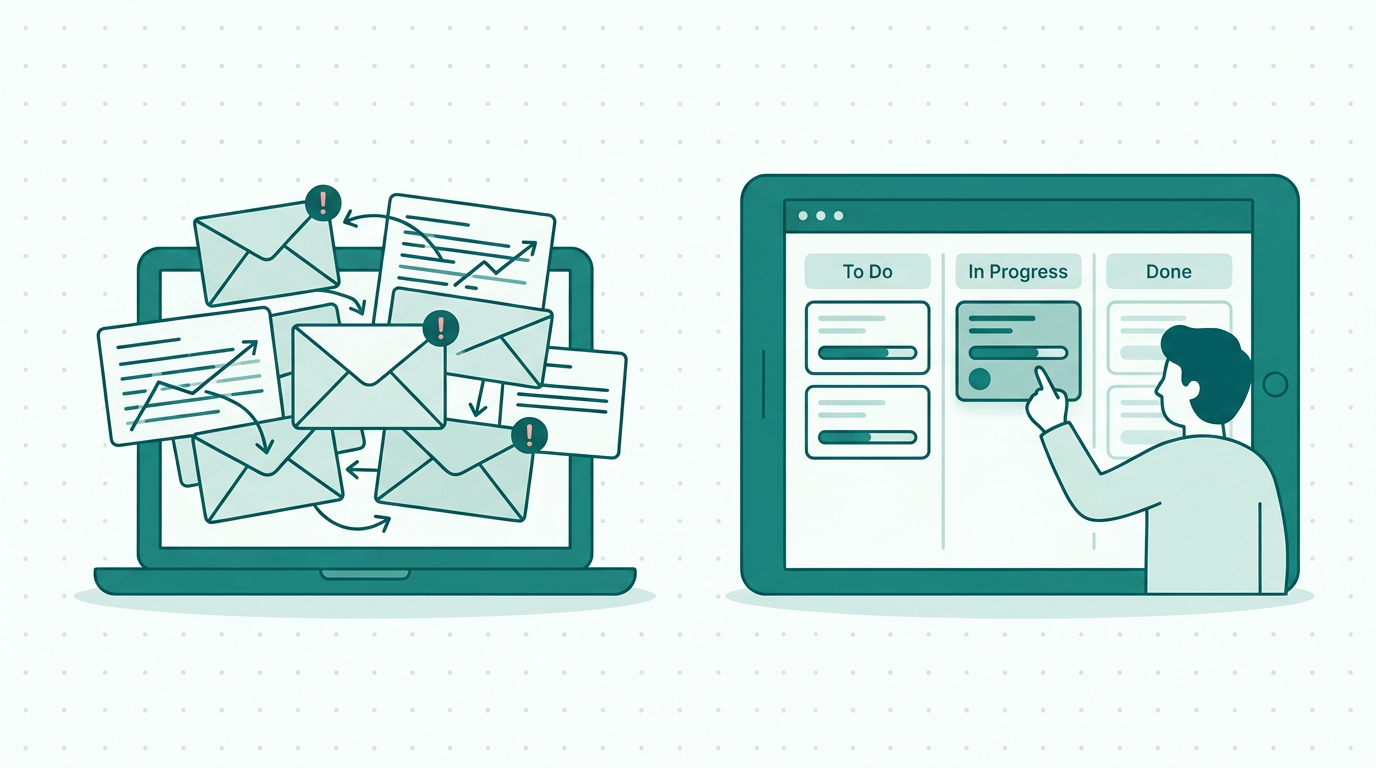
Explore the pros and cons of shared inboxes and request tracking tools to find the best solution for your small team's workflow.
Understanding the challenge: Communication in small teams
Effective communication is crucial for any team, particularly in smaller organizations where resources and personnel may be limited. As these teams handle a multitude of incoming requests—from customer inquiries and support tickets to project suggestions—having a streamlined process in place is essential. Many small teams often grapple with deciding between using a shared inbox vs request tracking tool for small teams.
Understanding the strengths and weaknesses of each option can help teams enhance their workflow and responsiveness. A shared inbox can seem like an easy solution, but it can lead to confusion and inefficiencies as the team's workload increases. On the other hand, request tracking tools offer structured methodologies that can help manage complexity and improve accountability.
This article aims to dissect both systems in detail, illustrating how they function, their benefits, and how solutions like PlanToValue can simplify the decision-making process. By exploring these two approaches to request management, small teams can make informed choices that align with their operational goals.
What Is a Shared Inbox?
A shared inbox is a centralized email address that multiple team members can access to manage incoming messages. This system allows teams to collaborate by sharing the responsibility of responding to inquiries and requests. For example, a team might use a shared inbox for customer service inquiries to ensure that all customer communications are handled promptly.
This approach can create an environment of teamwork, where members support each other in addressing client needs. However, while convenient, shared inboxes have their drawbacks. They can lead to confusion over who is responsible for responding to a particular email, creating potential overlaps in communication.
Messages can easily be overlooked, leading to delays in responses and a decrease in customer satisfaction. Additionally, tracking the resolution of requests becomes a challenge, as the lack of structured organization can result in missed follow-ups or unresolved issues. As a result, many teams find that managing a shared inbox becomes unwieldy and inefficient over time.
Ultimately, while shared inboxes may work well initially, they can hinder a team's ability to scale and respond effectively to growing demands.
What Is a Request Tracking Tool?
A request tracking tool is designed specifically to manage and prioritize incoming requests systematically. Unlike a shared inbox, these tools offer features that provide clarity and organization. For instance, PlanToValue's request tracking solution allows teams to submit requests, categorize them based on urgency and importance, and assign them to specific team members for resolution.
This structured approach enhances accountability and ensures that no request goes unanswered. Moreover, request tracking tools often come equipped with features such as automated status updates, notifications for pending tasks, and the ability to set deadlines, which further streamline the workflow. Additionally, many request tracking tools include insights and analytics features that help teams identify trends, measure performance, and improve response times, making them a more robust solution for managing tasks.
By implementing a request tracking tool, teams can optimize their operations and focus on what truly matters—delivering high-quality service to their clients and stakeholders.
Pros and Cons of Shared Inboxes
- Pros: Shared inboxes are easy to set up and require little training for team members. They centralize communication and allow for quick responses to incoming requests. Team members can collaborate by forwarding emails and tagging colleagues in conversations, making it a straightforward option for small teams with limited resources. The simplicity of using an email client that the team is already familiar with adds to the appeal of shared inboxes, as there is no need to adapt to new software or workflows. Furthermore, shared inboxes can foster a collaborative culture within small teams, allowing members to see the entirety of client interactions and facilitating collective problem-solving.
- Cons: Despite their advantages, shared inboxes can quickly become chaotic. Without a clear system for tracking responses, messages can slip through the cracks, causing frustration among both team members and clients. Additionally, it can be unclear who is responsible for addressing each request, which can lead to duplicated efforts or delays in response. The ambiguity surrounding task ownership may result in team members inadvertently stepping on each other's toes, compounding confusion. Furthermore, shared inboxes lack the analytical tools that request tracking solutions typically offer, making it harder to assess performance and identify areas for improvement. As requests increase and become more complex, these shortcomings can significantly impair a team's efficiency and effectiveness.
Pros and Cons of Request Tracking Tools
- Pros: Request tracking tools provide clarity by allowing teams to assign specific requests to individual team members. This structure promotes accountability and ensures that requests are addressed in a timely manner. Users can benefit from features that allow them to set priority levels, add notes, and track progress in real-time. Additionally, tools like PlanToValue offer analytics capabilities, enabling teams to gain insights into their workflows and improve efficiency over time. With such tools, organizations can monitor key performance indicators (KPIs) such as response times, resolution rates, and client satisfaction levels. Users can prioritize requests based on urgency and importance, resulting in better resource allocation and satisfaction among clients. This data-driven approach also enables teams to make informed decisions about where to focus their efforts moving forward.
- Cons: On the downside, request tracking tools may require more initial setup and training for team members. Transitioning from a shared inbox to a more complex system can introduce challenges, as team members must familiarize themselves with new processes and interfaces. There could also be a learning curve associated with adapting to a new system, which might temporarily slow down productivity. Additionally, depending on the tool selected, costs can vary, which is a consideration for smaller teams operating with limited budgets. It's crucial for teams to weigh the potential return on investment against the costs, ensuring that they choose a tool that aligns with their financial constraints while still meeting their operational needs.
Making the Right Choice for Your Team
Choosing between a shared inbox and a request tracking tool depends largely on your team's specific needs and workflows. If your team primarily handles a high volume of incoming requests and requires a structured method for tracking progress, a request tracking tool is likely the better choice. These tools not only help in managing tasks but also facilitate an organized approach to customer service and project management.
Conversely, if your team is small and the volume of incoming requests is manageable, a shared inbox may suffice for the time being. However, as your team grows and the complexity of requests increases, transitioning to a request tracking tool like PlanToValue can help maintain efficiency. During the decision-making process, consider factors such as the team's size, the nature of the requests, and long-term growth projections.
It may also be beneficial to pilot both systems to assess which better meets the team's requirements.
Real-World Examples of Implementation
Consider a small marketing team that initially used a shared inbox to handle client inquiries. Over time, as their client list grew, they found it increasingly difficult to manage responses. They faced challenges in accountability and tracking, leading to dissatisfaction among clients.
The marketing team often experienced missed opportunities as emails were lost in the shuffle, and team members were unsure who was responsible for follow-ups. By switching to a request tracking tool like PlanToValue, they could categorize requests, assign team members, and track the status of each inquiry. This transition not only improved response times but also enhanced team collaboration.
Team members could now easily see the status of requests and communicate more effectively with one another. Additionally, the analytics feature allowed them to identify trends in client requests, which informed their marketing strategies. Ultimately, these improvements led to higher client satisfaction and retention rates, highlighting the benefits of structured request management.
Benefits of Using PlanToValue for Small Teams
PlanToValue provides a comprehensive solution for small teams looking to optimize their workflow in handling incoming requests. The platform allows teams to easily categorize and prioritize requests, assign tasks, and track progress transparently. Its user-friendly interface ensures that team members can navigate the system without extensive training, making onboarding seamless and quick.
This ease of use is particularly important for small teams that may not have dedicated IT support. The analytical features help identify bottlenecks and areas for improvement, allowing teams to refine their processes continually. For instance, managers can generate reports to analyze response times and workload distribution among team members.
By utilizing PlanToValue, small teams can enhance their operational efficiency and responsiveness to requests, ultimately leading to improved outcomes. The ability to adapt the tool to meet specific needs ensures that teams can use it as a long-term solution as they grow.
Evaluating Your Current Workflow
To make an informed decision about whether to stick with a shared inbox or transition to a request tracking tool, evaluate your current workflow. Consider the volume of requests your team handles, the complexity of those requests, and how well your current system supports accountability and tracking. Gathering feedback from team members can also provide insights into pain points and areas for improvement.
Identify any recurring issues that team members face, such as missed deadlines or unclear responsibilities. Additionally, consider the types of requests your team manages; if they vary significantly in urgency or complexity, a request tracking tool may be more appropriate. Ultimately, a thorough assessment will guide you in selecting the most effective solution for your team’s needs.
Documenting this evaluation process can also serve as a reference for future decisions, ensuring that your team continues to align its tools with its evolving objectives.
So, Which Option Is Right for Your Team?
In conclusion, both shared inboxes and request tracking tools have their advantages and disadvantages. While shared inboxes may work for small teams with limited request volumes, they can lead to confusion and inefficiencies as the organization grows. Request tracking tools like PlanToValue offer a more structured approach, promoting accountability and improving response times.
As teams scale, the importance of having a clear system becomes increasingly evident. It is crucial to assess your team’s specific needs and workflows to make the best choice. Remember, transitioning to a request tracking tool can significantly enhance your operational efficiency and client satisfaction.
The key is to remain adaptable and to continuously evaluate your processes to ensure that they align with your goals.
FAQ
Frequently Asked Questions
What is the main difference between a shared inbox and a request tracking tool?
A shared inbox is a centralized email system where multiple users can manage incoming messages. In contrast, a request tracking tool systematically categorizes, prioritizes, and assigns requests, enhancing accountability and tracking. This structured approach minimizes confusion and ensures that all requests are addressed in a timely manner.
Can a small team effectively use a shared inbox?
Yes, a small team can effectively use a shared inbox if the volume of incoming requests is manageable. However, as the team grows, this method may become inefficient. Shared inboxes can lead to confusion and missed communications, making it difficult to maintain a high level of service as demand increases.
What are the benefits of using a request tracking tool?
Request tracking tools improve accountability, ensure timely responses, and provide analytical insights to enhance workflows. They help teams prioritize and manage requests more effectively, leading to higher efficiency and better satisfaction among clients. Additionally, these tools often include features such as automated notifications and progress tracking, which streamline communication and task management.
How does PlanToValue enhance request management?
PlanToValue offers a user-friendly platform that allows teams to categorize and prioritize incoming requests, assign tasks, and track progress, leading to improved efficiency and client satisfaction. The tool's analytical features also enable teams to monitor performance and identify areas for improvement, ensuring that they can continuously refine their processes over time.